A practical guide comparing cloud-managed security cameras to traditional NVR/DVR systems. Learn why businesses are migrating to cloud and when on-premise still makes sense.

On-location IT support can resolve physical, network, and infrastructure problems that remote assistance cannot fully diagnose. The right provider should fit your systems, response requirements, security expectations, and growth plans.
On-location IT services usually combine practical troubleshooting with planned infrastructure work. A technician may inspect equipment directly, test connections, replace a failing component, or coordinate a larger installation. For organizations with several offices, the question is not only whether a provider is nearby, but whether it can deliver consistent support across each site. When people search for can on location it services near me, they are often looking for a partner who can understand the business context as well as the immediate fault.
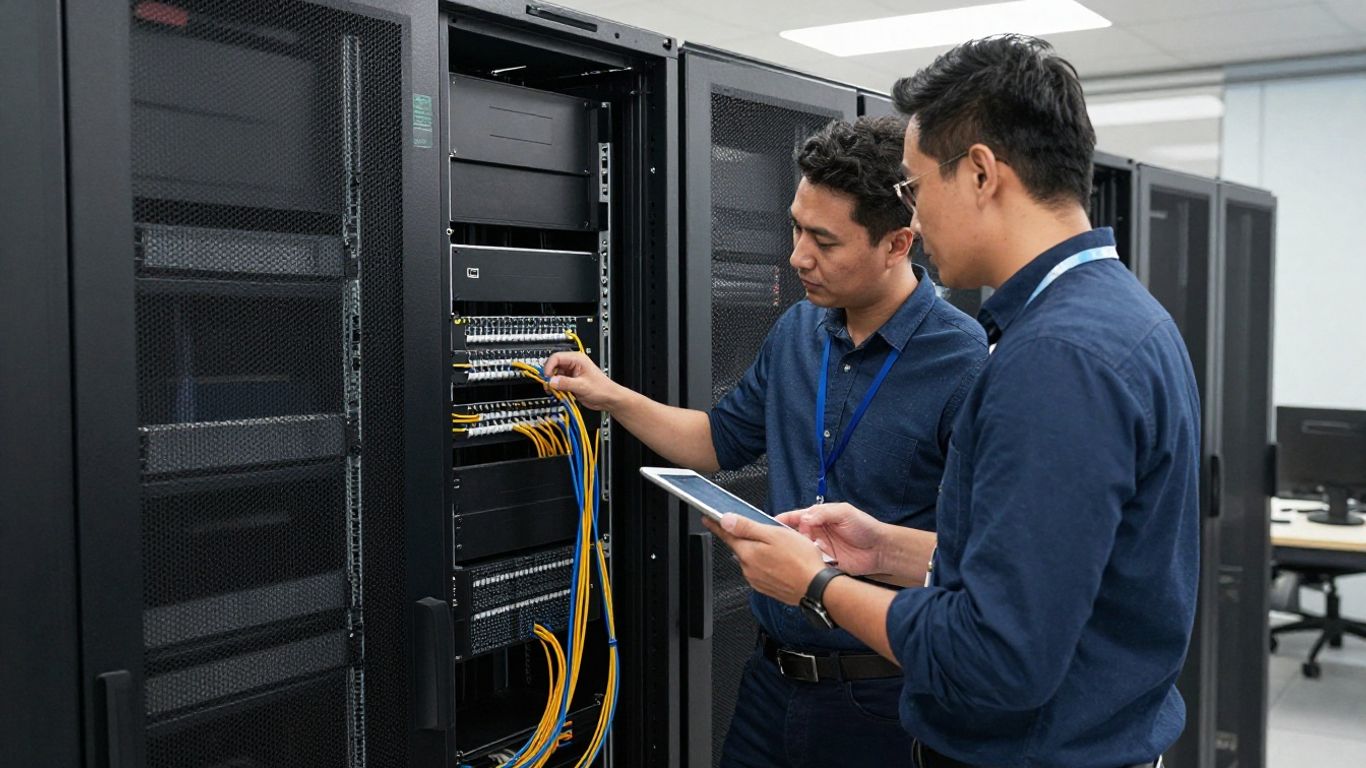
Remote support is effective when a technician can access a system and the issue is limited to software or configuration. It becomes less useful when a workstation will not power on, a cable is damaged, a printer is misbehaving, or a rack needs physical inspection. An on-location technician can observe the conditions around the device, isolate the fault, and explain which repair or replacement is justified.
The visit may also reveal related issues, such as poor ventilation, overloaded power strips, loose connections, or equipment that has been placed in an unsuitable area. That broader view can prevent a quick fix from becoming another ticket a week later.
Network work often depends on the physical environment. Wireless coverage, cabling routes, switch placement, access points, and network closets all affect performance, and some problems cannot be judged accurately from a remote dashboard. A local technician can inspect those conditions, test connections, and coordinate installation or maintenance with the people using the space.
For a growing organization, this may include planning a network change around business hours, labeling connections, and documenting what was altered. Harris Technology Services describes its work as including network infrastructure alongside IT and physical security, with solutions that may be cloud-managed or on-premise. That scope is relevant when a business wants one accountable partner for connected infrastructure rather than several disconnected handoffs.
New computers, servers, printers, phones, and other devices need more than a trip from the shipping box to a desk. Setup can involve account access, software configuration, network connection, peripheral testing, and placement that suits the workspace. A technician can also coordinate deployment so employees are not left waiting while equipment is prepared one device at a time.
Server and device work should be planned carefully around access permissions and existing dependencies. Before anything is changed, ask what will be backed up, what downtime is expected, and how the provider will record the final configuration. Those details matter especially when several locations share systems or equipment.
On-location support is not a substitute for a complete security program, but it can address practical weaknesses at the site. A provider may review device placement, access to network equipment, update status, account practices, and the way staff connect hardware. The exact work should be stated in the service scope rather than assumed from a general promise of “IT support.”
Harris Technology Services provides physical security, IT, network infrastructure, and managed technology solutions as part of its nationwide offering. For a business assessing that kind of partner, the useful question is how those capabilities will be coordinated with its own systems, policies, and risk priorities. A clear assessment is more valuable than a broad list of services with no defined outcome.
The strongest case for on-location support is a problem that depends on the building, equipment, or people in it. A local visit can also make sense before a major change, when several small issues suggest a larger infrastructure concern. The decision should weigh urgency, business impact, and whether the provider can work safely around operations.

Some issues need a person at the site because the symptoms are physical. A technician may need to trace a cable, inspect a server room, test a device directly, or determine whether an environmental condition is affecting equipment. Remote instructions can help employees perform simple checks, but they are not a substitute for hands-on diagnosis when the fault is uncertain.
On-location support is also useful when staff are uncomfortable opening equipment or changing connections. A provider should explain the diagnosis in plain language and separate what must be fixed now from what can wait.
Moving offices creates a concentrated set of IT risks. Devices must be disconnected, transported, reinstalled, and tested, while network services and access controls need to work at the new site. An on-location provider can coordinate with facilities, movers, internet carriers, and internal stakeholders so technology is considered in the move schedule instead of treated as a last-minute task.
The same reasoning applies to expansions and upgrades. A provider can assess available power, cabling, connectivity, equipment space, and user requirements before the organization commits to a design. That early assessment reduces surprises and gives decision-makers a clearer basis for cost and timing.
A recurring outage deserves more than repeated resets. Patterns may point to failing equipment, congestion, poor wireless coverage, power instability, or a configuration that does not match the way the office operates. An on-location visit can connect the technical symptoms to the physical layout and daily workflow.
Ask the provider to document the pattern, tests performed, likely causes, and recommended next steps. The goal is not simply to restore service for another day; it is to understand what will make the environment more stable and how that improvement will be verified.
Organizations with regulated data, specialized devices, or strict access procedures may need support that accounts for more than ordinary desktop troubleshooting. The provider should be able to explain how technicians are authorized, how work is recorded, and how sensitive information is handled during a visit. Requirements vary by industry, so the engagement should begin with the organization’s actual policies and obligations.
Specialized equipment may also require coordination with a manufacturer, a facilities team, or a line-of-business application owner. Confirm those dependencies before scheduling service, particularly if a failed device affects production or customer-facing operations.
Start with the service area, then narrow the search by technical fit and operating discipline. A provider may be close enough to reach your office but lack experience with your environment or the staffing needed for a multi-site organization. Search results are only a starting point; conversations, references, and written commitments provide the more useful evidence.
Use your city, ZIP code, and the type of help required when searching. “On-location IT” can mean a one-time repair, scheduled maintenance, network installation, or a broader managed relationship, so describe the actual need. A location search tool, such as this nearby locations search, illustrates the value of checking distance and service area rather than assuming that every nearby result serves every location.
Ask whether the provider supports your office directly, uses local technicians, or dispatches from another market. For organizations with multiple sites, request a map of coverage and an explanation of how service is coordinated across locations.
Certifications can indicate training, but they should be considered alongside relevant experience. Ask about environments similar to yours, including the number of users, types of devices, network design, operating hours, and any security or compliance constraints. Customer feedback is most useful when it describes communication, documentation, follow-through, and the handling of difficult incidents.
Request references when the project is significant. A brief conversation with a comparable customer may reveal whether the provider keeps appointments, explains costs clearly, and remains accountable after the immediate issue is resolved.
A provider’s normal response time may be very different from its emergency response time. Clarify service hours, dispatch procedures, after-hours contacts, remote triage, travel charges, and what qualifies as an emergency. If a guaranteed response is offered, ask where that commitment appears in the agreement and what remedy applies if it is missed.
Availability should also match the business calendar. A retailer, clinic, manufacturer, or professional office may need work performed outside ordinary hours, while another organization may prefer planned daytime visits with minimal disruption.
Make a short list of the systems that matter most: endpoints, servers, wireless networks, internet connections, cloud services, physical security, or specialized equipment. Then ask each provider to identify which work it performs directly and which work it assigns to another party. That distinction affects accountability, scheduling, and the quality of documentation.
Harris Technology Services positions itself around integrated physical security, IT, network infrastructure, and managed technology for single-site and multi-site organizations. That kind of integrated scope can be useful when infrastructure and security decisions overlap, provided the proposed work is tailored to the organization rather than overbuilt.
Price matters, but the lowest hourly rate does not necessarily produce the lowest total cost. Compare what the provider will do, how quickly it will respond, what is documented, and how responsibility is handled after the visit. A useful comparison keeps one-time projects, recurring maintenance, and emergency support distinct.
Ask for a written explanation of labor rates, minimum charges, travel fees, parts handling, after-hours pricing, and cancellation terms. Managed packages may bundle monitoring or scheduled maintenance, while hourly service may be more suitable for occasional needs. Neither structure is automatically better; the right choice depends on the predictability and complexity of your support needs.
A simple comparison table can make the differences easier to see before a sales discussion becomes too abstract.
| Comparison point | Questions to ask | Why it matters |
|---|---|---|
| Labor and travel | Are dispatch, travel, and minimum hours separate charges? | Helps estimate the real cost of an on-site visit. |
| Contract scope | Which systems, locations, and tasks are included? | Prevents assumptions about unsupported equipment. |
| Parts and projects | How are replacement parts and larger projects approved? | Keeps unexpected spending visible. |
| Cancellation and renewal | How can either party change or end the agreement? | Clarifies flexibility over time. |
Read the exclusions as carefully as the included services. A contract that appears inexpensive may leave important devices, locations, or after-hours needs outside the actual scope.
Emergency support should be defined in operational terms. Ask how an incident is reported, who receives it, when triage begins, and when a technician is dispatched if remote work cannot solve the problem. A response-time promise is meaningful only when the starting point and service conditions are clear.
Consider the business consequence of delay. A short outage may be inconvenient for one office but costly for a production site or a location that cannot serve customers without its systems. Match the support tier to that consequence rather than paying for urgency the business does not need.
If a provider includes monitoring or management tools, ask what they cover and what action follows an alert. Determine whether maintenance includes updates, configuration reviews, equipment checks, reporting, or only scheduled visits. The provider should also explain who owns the accounts and data generated by those tools if the relationship ends.
A recurring service is most useful when it produces understandable records. Reports should help the organization see open risks, completed work, recurring faults, and decisions that need approval instead of simply listing technical activity.
Before granting a technician access to systems or facilities, confirm insurance coverage, background-screening practices where relevant, access controls, confidentiality terms, and data-handling procedures. Ask how credentials are protected and whether technicians use individual accounts or shared logins. These questions are reasonable safeguards, not signs of distrust.
Also ask how backups and recovery are treated during service. A provider should state whether it verifies backups, avoids unnecessary data exposure, and records changes that could affect recovery. The organization remains responsible for its decisions, but a careful provider should make those risks visible.
A well-run visit has a beginning, middle, and end. The technician first establishes what is wrong and what the business needs, then proposes work for approval, and finally tests and records the result. Even a small repair benefits from that structure because it creates a useful history for the next incident.
The first conversation should cover symptoms, timing, affected users, recent changes, and business impact. The technician may inspect equipment, review logs, test connectivity, and speak with the people who encountered the problem. Avoid rushing this stage; an incomplete description can lead to a fix that addresses the visible symptom but not the cause.
Ask for a plain-language explanation of findings. You should understand what was tested, what remains uncertain, and whether the issue presents a broader risk to other systems or locations.
Once the problem is understood, the provider should separate immediate remediation from optional improvements. A quote should identify labor, parts, project work, expected downtime, assumptions, and any work that requires another party. If multiple approaches are possible, ask how their cost, risk, and useful life differ.
Approval should be documented before non-emergency work begins. This protects both sides and gives internal stakeholders a clear record of what they authorized.
Implementation may involve replacing equipment, changing configurations, moving connections, or setting up devices. The technician should work from an agreed plan and protect users from unnecessary disruption. Testing should reflect how the system is actually used, not only whether a single device powers on.
Documentation might include updated device details, network information, configuration changes, photos of installed equipment, and unresolved recommendations. The more complex the environment, the more valuable accurate records become.
A short educational video can help nontechnical stakeholders understand why testing and documentation belong in the service process. It should supplement the provider’s findings, not replace a site-specific assessment.
Before the technician leaves, confirm what happens next. Ask whether there is a follow-up check, who receives the service report, how unresolved items are tracked, and how to request additional help. If the issue is recurring, agree on what evidence will show that the corrective action worked.
Ongoing maintenance can then be based on observed needs rather than a generic schedule. That may mean reviewing trends, planning replacements, or adjusting support coverage as the organization changes.
The provider can do better work when the organization arrives with a clear picture of its systems and priorities. Preparation does not require technical expertise; it requires accurate information and a willingness to identify business consequences. The result is a more focused visit and fewer avoidable delays.
Create a current list of locations, users, computers, servers, network equipment, printers, phones, security systems, internet services, and critical applications. Include asset identifiers, owners, approximate age, and known problems where possible. Mark equipment that is shared, business-critical, or difficult to replace.
An inventory also helps a provider estimate effort. It can reveal unsupported devices, duplicate services, missing ownership information, or systems that have never been included in a maintenance plan.
Decide what the organization needs most from the engagement. One business may prioritize restoring a failing network, while another may need a predictable support model for several locations. Write down the desired outcome, acceptable downtime, budget limits, and deadlines before comparing proposals.
Keep the goals measurable where practical. “Fewer interruptions” is a useful direction, but it becomes more actionable when paired with an incident baseline, response target, or project milestone.
Confirm that important data is backed up and that recovery information is available before major work starts. Identify who can approve changes, where credentials are stored, and which systems must not be interrupted without notice. If sensitive information may be visible during the visit, establish access boundaries in advance.
Do not send passwords through casual channels or leave privileged sessions open. A short preparation checklist can include:
These steps do not eliminate risk, but they give the technician a safer starting point and give the organization a clearer recovery path if plans change.
Track the conditions that led you to seek help. Useful measures may include outage frequency, time to restore service, recurring tickets, delayed workflows, and the number of devices outside support. Review the baseline before work begins so later changes are not judged only by memory.
Harris Technology Services emphasizes assessment, integration, scalability, and managed technology across cloud-managed or on-premise systems. Whether you work with that provider or another qualified firm, those principles are practical ways to judge whether support is improving operations rather than merely closing tickets.
On-location IT support can solve business technology problems when the issue involves physical equipment, site conditions, installation work, or a pattern that remote troubleshooting has not resolved. The best choice begins with a careful assessment of systems, priorities, response needs, and data-protection requirements, followed by clear scope and documented results.
On-location IT services are technical support and infrastructure services delivered at a business site. They may include troubleshooting, network work, device setup, equipment replacement, maintenance, and assessment of physical conditions affecting technology.
It is generally more suitable when a problem involves cabling, power, device hardware, a physical network layout, installation, or equipment that cannot be accessed remotely. It can also help when repeated remote fixes have not identified the underlying cause.
Response times vary by provider, location, service tier, contract, and whether the issue is classified as an emergency. Ask for normal and after-hours commitments in writing, including when the response clock starts.
Ask about relevant experience, service coverage, supported systems, pricing, emergency procedures, documentation, insurance, access controls, data handling, and contract exclusions. References from organizations with similar needs can add useful context.
No. Planned visits can support office moves, network improvements, device deployments, maintenance, infrastructure assessments, and technology upgrades. Preventive work may reduce the likelihood of disruptive incidents later.
Prepare an inventory of devices and systems, describe the symptoms and business impact, confirm backups, identify authorized approvers, and share scheduling constraints. Clear preparation helps the technician spend more time diagnosing and resolving the actual issue.
Compare conditions before and after service using measures such as outage frequency, restoration time, recurring tickets, delayed work, and device coverage. Review the results with the provider and adjust the support plan when the organization’s needs change.
Connect with us to explore our scalable solutions tailored to your unique needs and receive a personalized free quote.